
Behavioral Therapy
DBT, or dialectical behavior therapy, is well known around the world as a powerful way to deal with emotional pain, make friends, and improve mental health. Group therapy is a popular way to do DBT, though most people do it one-on-one. It has its own pros and cons. It will talk about the issues that might come up with group therapy, how dialectical behavior therapy works, and how well it helps with many different mental health issues in general.
What Are the Cons of DBT Group Therapy?
DBT group therapy aims at helping people learn skills in dealing with stress, regulating their emotions, and dealing with people. But, like any other healing method, it could have some problems:
Privacy Concerns: They are not willing to share examples with a group of people. Newcomers to behavioral therapy do not like talking to other people because this brings fear of being judged or seen in a bad light.
Difficulty Keeping Up: Should people attend the DBT group therapy meetings, such meetings will usually have been organized in advance. If a participant misses a lesson, or fails to grasp some of the materials taught in the lesson, it can be a challenge to recover that lost ground. This may well reduce their ability to benefit from the therapy optimally.
Diverse Group Dynamics: People in groups often have different levels of knowledge and dedication to the process. When people aren’t engaged or making progress at the same rate, it can be frustrating, especially if they think the group is going too quickly or too slowly.
Limited Personalization: Group treatment, unlike dialectical behavior therapy for one person, can’t change the way they talk or do things to fit the needs of just one person. This could be a problem for people who need more individualized help.
Potential for Triggers: Hearing other people talk about their problems can sometimes make people feel things, especially if they are dealing with trauma or serious emotional distress.
Nevertheless, such problems do exist but DBT group therapy is really beneficial to many who need it, especially, when it’s performed together with individual DBT or as one of the segments of the general program of treatment.
How Does Dialectical Behavior Therapy (DBT) Work?
DBT was originally created by Dr. Marsha Linehan to be applied to persons having BPD, Borderline Personality Disorder. The first person to use it was her. It has been utilized for more mental illnesses over time such as; anxiety, depression, eating disorders and drug use disorders.
Key Components of DBT
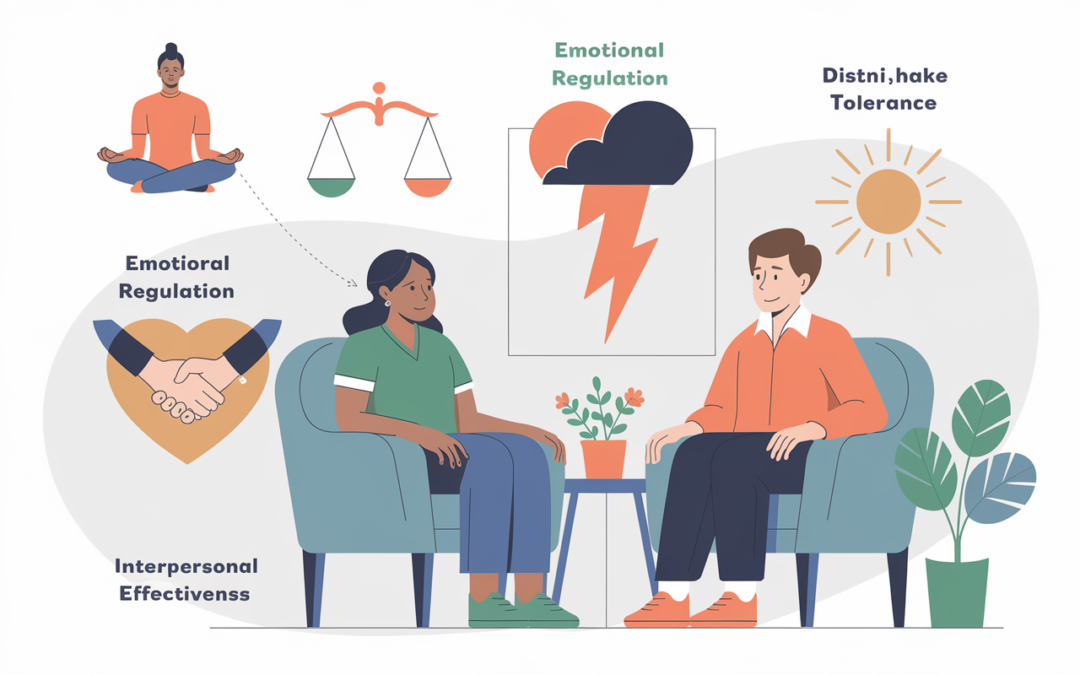
From DBT, you should be able, in some way, to both accept things and to promote change. Mindfulness-based and cognitive-behavioral techniques are used, and it is taught in four major modules:
Mindfulness: Dialectical behavior treatment includes use of principles of mindfulness. Individuals are taught ways of being in the present moment while avoiding the judgments. When someone learns this skill, they become more aware of their thoughts and feelings, which helps them answer more carefully instead of quickly.
Distress Tolerance: People who take this module will learn how to deal with strong feelings and crises without acting in harmful ways. People are often taught techniques like extreme acceptance, self-soothing, and distraction.
Emotional Regulation: People who take this module learn how to recognize, understand, and control their feelings. This means making people less emotionally vulnerable and giving them more good emotional experiences.
Interpersonal Effectiveness: In this lesson, you will gain knowledge on how best to communicate or approach people and establish rapport with the right manner. This way, the other teaches people how to say no and state their boundaries, ask for what they want, and handle conflicts in relationships.
Delivery Formats of DBT: There are two main ways that dialectical behavior treatment is usually given:
- Individual Therapy: Individual therapy is when you meet with a therapist alone to work through specific problems and use DBT skills.
- DBT Group Therapy: When people go to DBT group therapy classes, they learn and practice skills with others in a safe space.
Phone coaching is often available for real-time help and guidance in both formats.
Is Dialectical Behavior Therapy Effective?
A lot of study and writing has been done on how well dialectical behavior therapy works. Many people with mental health issues believe it to be one of the best ways to get better.
Conditions Treated with DBT
Borderline Personality Disorder (BPD): DBT was initially developed specifically for people like those with BPD and it remains the gold standard. Research conducted on the same reveals that a great deal of reduction in self-harm, suicidal intentions and mental instability.
Depression and Anxiety: Self Managing Antidepressant SSRI and DBT behavior therapy for sadness and anxiety have been revealed to support patients dealing with their conditions through adopting appropriate strategies of behavior.
Substance Use Disorders: In DBT targeting distress tolerance and mindfulness has been of benefit to people suffering from addiction especially because they have been able to reduce the level of vulnerability of relapse and have enhanced the individuals’ emotional resilience.
Eating Disorders: DBT is for individuals with eating issues like bulimia and binge eating by coaching them on improved approaches to manage stress and emotional factors.
Evidence Supporting DBT’s Effectiveness: Research shows over and over again that dialectical behavior treatment is helpful:
- I found an article in the American Journal of Psychiatry that reported DBT effective in retaining individuals with BPD in treatment and reported fewer suicidal ideas and acts.
- A systematic review that got published in the journal Cognitive Behavioral Therapy in 2020 showed that individuals who had mood difficulties had better ways of managing their feelings with the help of DBT.
Why DBT Works
Dialectical behavior treatment works because it looks at the whole person. It gives people useful tools to handle their feelings and encourages self-compassion by talking about both acceptance and change. The group treatment part makes people feel like they are part of a community and helps them learn from each other, which makes it even more effective.
Final Thoughts
Due to its structured style and group dynamics, DBT group therapy may not be right for everyone. However, for many, it is still a very helpful tool. When done hand in hand with individual therapy, it provides a system of handling emotional issues besides improving overall wellbeing.
DBT has been found useful in treating individuals with emotion regulation, interpersonal relationship or other mental disorder issues. DBT aims to provide those who struggle with the necessary skills to deal with life by well-explained concepts like mindfulness, emotional regulation and interpersonal effectiveness.
If you’re considering therapy to boost your mental health, DBT could be a huge step toward a better live. This is true whether you do it alone or in a group.
Behavioral Therapy
Behavior therapy is now a key part of mental health treatment. It helps almost all psychological issues using an evidence-based approach. The most widely used treatment described above is DBT treatment and CBT. While many of them share certain similarities, they remain very distinct in what they focus on and how they are applied. But what is dialectical behavior therapy? How does it relate to cognitive behavioral therapy? What techniques set DBT apart?
What is DBT Therapy?
It is known as dialectical behavior therapy and was introduced in the late 1980s by Dr. Marsha Linehan. This treatment was first for borderline personality disorder. It has since been used for other mental health issues, such as depression, anxiety, and eating and substance use disorders.
The word ‘dialectical’ defines the balance between two opposites: acceptance versus change. DBT stresses understanding and validating one’s emotions. It also supports growth and change.For this reason, this two-pronged approach makes DBT treatment very helpful for those who are having strong difficulties with emotions, self-destructive behaviors, or relationships.
Core Components of DBT Therapy
DBT therapy typically consists of four main components:
Individual Therapy: Clients, supervised by a therapist, work to tackle personal challenges. They set goals and learn coping strategies. Group Skills Training
Group Skills Training: Group sessions teach useful skills in four areas: controlling emotions, being aware, dealing with stress, and getting along with others.
Phone Coaching: Support is provided after sessions. It is for clients to work through DBT skills in real time ‘in the moment’.
Therapist Consultation Teams: Consultation groups are held so therapists can work together. The goal is to provide effective, kind care.
What Are the Differences Between CBT and DBT?
CBT and DBT are two evidence-based, behavioral techniques. Each focuses on a patient’s needs in a different way and has a different application. Here are some key differences in detail:
Focus
- Cognitive Behavioral Therapy (CBT): The CBT pursues negative thinking patterns, which yield negative feelings and behaviors. The treatment itself is goal-oriented and teaches the patient how to do things which just work in opposition to such cognitive distortions, catastrophizing, or Black and White thinking.
- Dialectical Behavior Therapy (DBT): It’s the same as DBT therapy because it addresses it. But, it is not the same. It manages emotions and builds social skills. DBD uses a dialectical approach. It balances acceptance of a person’s experience with a need for change.
Techniques
CBT:
- Cognitive restructuring
- Behavioral activation
- Problem-solving
- Exposure therapy
DBT:
- Mindfulness exercises
- Emotional regulation techniques
- Distress tolerance strategies
- Skills of interpersonal effectiveness
Target Population
CBT: Anxiety, depression, phobia, and PTSD are common conditions that it currently treats.
DBT: Dialectical behavior therapy helps patients with:
- extreme emotional dysregulation,
- chronic self-injury, or
- borderline personality or eating disorders.
Approach to Emotions
CBT: Makes an effort to change the thought behind the emotion.
DBT: It teaches people to feel their emotions, without judgment or avoidance, and to let them go.
Knowing these differences can assist individuals and therapists deciding an approach that suits them.
What Are Dialectical Behavior Therapy Techniques?
The practical techniques in dialectical behavior therapy are a strong point of this approach. They improve emotional and social skills. Here are the four main skill areas taught in DBT:
Mindfulness
DBT therapy is founded on mindfulness. It means being fully present and accepting, without judgment, whatever is happening in your body. This includes your mind, emotions, and physical state. Mindfulness helps clients to see and respond, not react.
Example Techniques:
- Counting your way through FOMO’s meaning.
- Focusing on your breath when you’re engaged in grounding exercises.
Emotional Regulation
Skills in emotional regulation help with how to manage intense emotions that can feel like too much to bear or do anything about. These techniques aim at knowing about emotion, not being vulnerable to negative emotion, and generating positive experience.
Example Techniques:
- That is, labeling emotions.
- A self care routine to create emotional vulnerability.
- The use of opposite action (e.g., smiling while feeling sad).
Distress Tolerance
Distress tolerance skills are abilities for a person to stay afloat when in the middle of turmoil and avoid using substances and self destructing behavior. They focus on learning healthy ways to bear what could be distressful.
Example Techniques:
- We use the TIPP method of Temperature, Intense exercise, Paced breathing, Progressive relaxation.
- This means practicing radical acceptance, the idea of trying to willfully accept situations that you can’t change.
Interpersonal Effectiveness
Skills that help clients overcome interpersonal difficulty include teaching clients assertiveness, active listening and boundary setting. They are particularly useful to improve communication as well as conflict resolution.
Example Techniques:
- In other words, DEAR MAN (Describe, Express, Assert, Reinforce, Mindful, Appear confident, Negotiate).
- The FAST motto is Fair, Apologies avoided, Stick to values, and Truthful.
And by mastering these techniques, learning how to better handle emotion and evolving relationships, clients can achieve better emotional balance.
What Type of Therapy is Behavioral Therapy?
Behavioral therapy is a collective term for those therapeutic approaches which emphasize the alteration of harmful behaviors. It contains the belief that by learning something is learned, and can be unlearned or substituted with healthier alternative.
Key Characteristics of Behavioral Therapy
Action-Oriented: It focuses on what you can do to change particular behaviors, not what lead you to those behaviors in the past.
Goal-Oriented: Clients and therapists sit down together to establish measurable, realistic goals.
Evidence-Based: As we know, behavioral therapy bases its techniques on science.
Short-Term: Structured, on a short term time basis.
Types of Behavioral Therapy
CBT (Cognitive Behavioral Therapy): According to the fact, comprehensive treatment involves behavioral techniques along with cognitive intervention to deal with thought and behavioral patterns.
DBT (Dialectical Behavior Therapy): A behavioral therapy subset, it combines acceptance and change of emotional and interpersonal challenges.
Exposure Therapy: This therapy is used for anxiety disorders and involves making someone who is anxious very slowly uncover his fear.
Behavioral Activation: It is often used for depression because it encourages clients to do positive activities to help improve mood and lower avoidance.
Accompanied by versatility and effectiveness, behavioral therapy is a cornerstone of mental health treatment for conditions.
Conclusion
There are powerful tools with behavioral therapy to assist people in navigating with emotional and mental obstacles. CBT and DBT are among its methods of treatment that are effective and flexible. Unlike CBT, DBT focuses on balancing acceptance and change, or what accepting and changing something might look like, – and that makes it an especially helpful tool for emotional regulation and interpersonal challenges.
So they could begin to understand how dialectical behavior therapy—skills including mindfulness, distress tolerance and emotional regulation—form a toolbox of skills to help themselves cope with life’s challenges. These evidence based strategies if you’re wondering what behavioral therapy for you or someone you love is all about really lay a solid foundation to improving your mental health and wellbeing, hands down.

Health and Fitness, Health Care
There is a lot of worry, anxiety and depression we deal with to day. Mindfulness is becoming powerful tool for minds health. Science backs the way to healing, and mindfulness based therapy is the practice of old with modern psychology. Mindfulness-based therapy can help people deal with trauma, anxiety, and sadness. In this blog post, I talk about some of those benefits.
What Are the Advantages of Mindfulness-Based Therapy?
Mindfulness-based therapy, or MBT, is a type of therapy that is based on set times and uses mindfulness practices like meditation and deep breathing in treatment settings. This way of understanding the problem is called MBT (based on mindfulness techniques and designed to make people emotionally strong, self-aware and less stressed). Now let’s look at its pros:
Reduces Stress and Anxiety
Telling people to focus on the present moment without judging it helps people of all types to feel less stressed. It also gives the mind a little time, between a stimulus and a response so worry doesn’t grow any more.
Improves Emotional Regulation
Mindfulness-based treatment helps people figure out what makes them feel bad and how to deal with it. People who deal with strong feelings or mood disorders will benefit a lot from learning this skill.
Boosts Focus and Concentration
Mindfulness exercise changes the way the brain works so that you can focus and pay attention better. In addition to helping with therapy, this benefit also makes daily tasks and decisions easier.
Strengthens Resilience to Adversity
MBT helps people find inner peace, which makes it easier to handle the trials of life with strength and grace.
Supports Holistic Well-Being
Mindfulness-based care, in turn, addresses the whole-person approach in terms of the mind, body, and spirit. It tends to work effectively alongside other treatments for mental health, such as drugs or cognitive behavioral therapy.
MBT is an excellent method for augmenting overall mental health and physical feeling of well being as it is very easy to use and very easy accessible.
What Is Mindfulness Therapy for Anxiety?
Also, it has been used to treat anxiety. Mindfulness keeps people present, not trapped in a cycle of bad thoughts that makes them anxious. Many people are stressed because they think too much about a future that is not known. On the other hand, mindfulness helps people to focus on the present.
How It Works:
- Awareness of Thoughts: Anxiety thoughts will be watched by the individual with the help of mindfulness therapy, without making judgments. Instead, they let those thoughts pass by, like clouds passing in the sky.
- Body Scans and Relaxation Techniques: Individuals let go of tension, stored in muscles, through guided body scans. This tension is usually linked to anxiety.
- Breathing Exercises: Deep breathing in mindfulness slows the heartbeat, thus activating the parasympathetic nervous system to undertake this calming action.
- Non-Reactivity Practice: The concept of mindfulness itself is to respond and not react to anxiety-producing situations, therefore avoiding impulsive or panic-driven behavior.
The first thing that these techniques do within the mindfulness therapy is to aid one break away from the shadow of the anxiety and lead to peace.
What Is the Role of Mindfulness in Trauma Recovery?
This trauma can pull the cords and leave us so disconnected from ourselves and the world around us, it pulls the cords of what we are, and what is going on around us. Trauma recovery is impossible without mindfulness – it’s the safe and gentle form of reconnection with the present moment, which removes the emotional shards of past pain.
Why Mindfulness Is Effective for Trauma:
Fosters Safety and Grounding: Frequently trauma survivors feel stuck in fight-or flight responses. Mindfulness helps them be grounded in the present, feel safe.
Regulates the Nervous System: Meditation and deep breathing are examples of mindfulness practices that help to activate the body’s natural state of relaxation, or appreciation, and balance an overactive nervous system.
Encourages Self-Compassion: Survivors may feel guilty, ashamed or blame self. Self compassion is nurtured by mindfulness because then they can process their emotions without judgment.
Reduces Flashbacks and Intrusive Thoughts: Growth awareness of the present reduces the frequency and power of flashback that are anxiety and trauma oriented.
And for people who were survivors, it’s a powerful tool for regaining power in their life using the skill of mindfulness.
How to Treat Depression Through Meditation and Mindfulness?
People with depression think negatively, have perpetual sadness, and lose interest in things that they once loved. Therapy and medication remain absolutely essential ways to treat sadness the old-fashioned way. However, paying attention and meditating are excellent for a person, too.
The Science Behind Mindfulness and Depression:
The prefrontal cortex and the amygdala are two parts of the brain that change upon doing Buddhism. These changes:
- Slow down the activity in parts of the brain that are linked with having bad thoughts and reflection upon them.
- If you work on how you deal with your feelings, your mood will be more stable.
- Better learn how to deal with stress, which is a big cause of depressive episodes.
Steps to Incorporate Mindfulness for Depression:
Daily Meditation Practice: For 10 to 20 minutes every day, you should do mindfulness meditation. Pay attention to your breath, your body, or the sounds around you. Take small steps to bring your mind back to the present.
Gratitude Exercises: Mindfulness-based gratitude exercises can help people with sadness stop thinking about the bad things in their lives and start focusing on the good things.
Mindful Walking: As you walk, meditate by focusing on each step, the ground beneath you, and the things around you. This technique combines mindfulness with exercise, which makes you feel better.
Mindful Journaling: Don’t judge yourself as you write down your feelings and thoughts. Going back and reading what you wrote in your book can help you see patterns and understand how you feel better.
Mindfulness and meditation can help people get out of a negative thought loop and feel like they have a reason to live.
Final Thoughts
At Better Lives, Building Tribes, we believe that awareness is one of the most important ways to heal emotionally. Mindfulness gives people the tools they need to handle life’s difficulties with grace and strength, whether they use it in trauma recovery, mindfulness-based therapy, or meditation for depression.
As we do these things, let’s strengthen the bonds between us and our communities and make mental health a top concern in the world. We can make lives better and groups that do well if we work together.

Health and Fitness
With life being so busy and lots of social pressure to be ‘perfect’ at everything, mental health matters a lot. Brain based therapy and other good mental health techniques are shifting how we think about mental health. This new treatment should be talked about and more about mental health should be discovered. Therefore we should also search for nice way to help people who are mentally ill. Also, I want to say a few words about why therapy is so great for you — why it’s so important for you.
What is Dialectical Behavioral Therapy in Specific Terms?
DBT is a structured type of brain based treatment based on these ideas. The goal is to assist someone in coping with them, to be more conscious, and to get on with the others around them. Dr. Marsha Linehan created DBT as a way for people with borderline personality disorder (BPD) to take advantage of it. But since then it’s changed, today it’s a good way to tackle issues like eating disorders, grief and even anxiety.
The treatment is based on the idea that it is dialectical, which means it tries to change things while also accepting them as they are. These things help keep the balance:
- Mindfulness: But then how do you teach people to be mindful because you have to keep people in the present moment where there isn’t a lot to that emotional response.
- Distress Tolerance: People can get education on what to do to handle and take in painful feelings without acting out in hurtful ways. We refer to this as ‘distress tolerance.’
- Emotion Regulation: Emotion control is learned by helping people to identify, feel, name and manage their feelings in a constructive manner.
- Interpersonal Effectiveness: Provide people with the tools they need to heal the relationships, and to set the boundaries. This is what interpersonal effectiveness means.
DBT changes the game in mental health because its core parts not only help people break bad habits, but they also make them stronger and more self-aware.
What is Mental Health?
A state of a person who is emotionally, mentally, and socially well. Every day it makes us think, feel, and act differently. Mental health does not just refer to not having a mental illness; it also refers to being able to handle stress, make friends, and choose wisely.
You cannot say anything bad about mental health. It affects everything in our life, starting with our relationships and ending with work. Worry, sorrow, and other disorders that make your life less pleasant are just signs that your mental health is not going well.
It’s not as shameful to talk about it, but there are still problems; many times, people don’t get the mental health they need because they do not know how to get to or understand the tools. Setting a goal for mental health is good for growth, not just yours but others, too.
What Methods of Mental Healthcare Do You Find Effective?
There are many different types, and each one fits a person’s wants and preferences. There isn’t one specific method to help everyone, but the methods listed here seem to work very well:
Therapy (Psychotherapy)
Mental health treatment is based on therapy. Your options may include dealing with a professional who can assist an individual in working through their emotions, understanding behaviours, and ways that they can do better in a future future situation like cognitive behavioral therapy, dialectic behavioral therapy or psychodynamic therapy.
Medication Management
The medicines that the psychiatrists prescribe may change patients’ mental health condition in a great way. Mood stabilizers, antidepressant, and nervousness medications are included in some of the medications.
Mindfulness and Meditation
The mindfulness techniques that help reduce stress and hence make your emotional health good include meditation, yoga and deep breathing exercises. These methods correlate well with the dialectical behavioral therapy awareness part.
Lifestyle Adjustments
But also important for your mental health is getting enough rest, exercising and eating a healthy diet. The truth is that there is a link between mental and physical health, and so it can often take care of one helping the other.
Support Groups
Being able to join a group of people who are going through the same problems can help you feel as if you fit and that your problems are being understood. Support groups also offer open conversations, which help do away with the shame that surrounds mental health.
Creative Outlets
Journal writing, art therapy, and music therapy are creative ways of dealing with emotions and memories. The convenience of the techniques is that they can easily be done along with standard therapy.
How each measure works for each individual depends on personal circumstances; however, more often than not, the best results come from using more than one method together.
Why is Therapy Important for Mental Health?
The following will explain why anyone, regardless of their struggle, can better their lives through therapy. It will also review the importance of therapy in mental health:
Promotes Emotional Healing
Sometimes, the tough things that happen in life, leave really deep scars in our minds. There is a place to attempt to get through and face your feelings without being judged. That assists in you healing and finding out a lot more about you.
Encourages Self-Awareness
People seek therapy to find out why we come to believe do what we do. The first thing you can do to make things better is to realize it can be done. There are methods, such as dialectical behavioral treatment, which emphasize this sort of self-reflection.
Builds Coping Mechanisms
There is so much stress in life, but it’s all about how one handles it. People who go to therapy learn good ways to handle stress, worry, and issues.
Enhances Relationships
For relationships to be healthy, both people need to have good social skills. People learn how to speak clearly, set limits, and keep relationships strong through therapy, especially DBT’s interpersonal effectiveness module.
Reduces Stigma
Going to therapy makes getting help seem normal, which encourages others to put their mental health first without feeling ashamed or afraid of being judged.
Prevents Escalation
Problems with mental health can be stopped before they become problems by going to therapy. When help is given early on, people often get better and heal faster.
People can experience deep growth and better health by incorporating treatment into a larger mental health care plan.
Final Thoughts
We at Better Lives Building Tribes think that happy, healthy people are the key to happy, healthy communities. Taking care of mental health issues with kindness and useful methods, like dialectical behavioral therapy, builds strength and connection. Mental health care is an investment in a better future for everyone, whether it’s through therapy, changes to one’s lifestyle, or artistic outlets.
Let’s get rid of the shame, enjoy the trip, and form groups that help each other live better lives.

Health and Fitness
People get better, learn more about themselves, and become stronger through therapy. They can deal with problems in their lives and mental health issues better because of this. Treatment comes in many forms, each designed to help with a specific issue. These include dealing with trauma, fixing problems, and reaching personal objectives. We are going to talk about some problems with solution-focused treatment in this blog post. Along with its pros and cons, the main goals of trauma therapy will also be talked about.
What is Problem-Focused Therapy?
In problem-focused treatment, the goal is to find and fix certain problems. It is a structured and limited type of therapy. This method is not like therapies that look into deeper parts of the mind or bigger parts of life. This method is focused on solving the problems people are having right now.
Key Features of Problem-Focused Therapy
Defining the Problem: The first thing you need to do is figure out what’s making you unhappy. Something like a fight at work, stress over money, or issues in a relationship could be this.
Understanding Contributing Factors: To help the person figure out what’s wrong, the therapist looks at patterns of behavior and things in the person’s surroundings.
Actionable Strategies: Making plans for how to deal with the problem is a big part of treatment. This can mean making changes to your daily life, learning new skills, or finding better ways to talk to people.
Measuring Progress: Problem-focused treatment, on the other hand, keeps a close eye on progress to make sure the client gets real results.
Who Benefits from Problem-Focused Therapy?
- For people with particular problems, such as choosing one’s career or resolving relationship conflicts.
- Those in need of a structured and results oriented way to go about addressing issues.
Problem focused therapy is good for treating immediate issues but not so good for things like deep emotional issues or trauma, which usually demands more in depth forms of therapy.
What Are the Limitations of Solution-Focused Therapy?
Solution focused therapy is a short term approach, emphasizing solutions and bypassing problems. The main purpose of it is to support people to concentrate on their strength and resources to work on concrete plans to enhance.
Strengths of Solution-Focused Therapy
- It is short and goal oriented, resulting in time saving.
- It’s an empowering approach around what the client can do, not what they can’t do.
- It sets a positive tone, a forward looking mindset.
Limitations of Solution-Focused Therapy
Superficial Problem Analysis: The biggest limitation of solution focused therapy is that it focuses little on figuring out the “cause” of the problem. It means that instead of solving your issue once and for all, you often get temporary fixes.
Not Suitable for Complex Issues: The approach may not be as deep as some people need it to be if you’re someone who has experienced trauma, deep emotional struggle or a chronic mental health condition.
Overemphasis on Solutions: This sounds helpful in terms of trying to find solutions, but benefits of a solution may fail to address emotional needs, unresolved problems, or experiences of the individual.
Client Readiness Matters: Due to reliance on client articulation of goals and solutions, solution focused therapy relies heavily on the client. For those who are exhausted or ill motivated, this can be quite challenging.
In summary, tentative but strong thesis has been proposed, based upon this, the best method of attaining the short term goal is solution focused therapy, and not a nice tool to long term emotional or psychological healing.
What Are the Benefits of Trauma-Focused Therapy?
Trauma focused therapy treatment is specifically designed therapy for doctors to help the person process their traumatic experiences so much that they can get better and heal. Mental health, relationships, and general overall well being are all profoundly impacted by trauma and this therapeutic approach looks at how you impact it directly.
Key Benefits of Trauma-Focused Therapy
Addressing the Root Cause: By contrast, the specific thing (or things) that occurred, that were a part of the trauma, are what trauma focused therapy considers. People tend to deal with root cause and can hence choose to understand their feelings and then heal.
Improved Emotional Regulation: To go through a traumatic event, you may specifically feel worry, anger, or sadness. Therapy that focuses on trauma teaches people good ways to deal with feelings.
Reduced Symptoms of PTSD: People with PTSD can dream, flash back, or just feel too aware. Because this kind of treatment allows them a safe place to talk about and reframe the traumatic event, people tend to feel better.
Strengthened Relationships: Trauma stress can also make it hard to get along with other people at work and in your home. Trauma therapy provides people with the tools they need to find their confidence, speak better and make healthy connections.
Empowerment and Resilience: One of its biggest benefits is helping people to deal with trauma in a healthy way. The clients who change and get better by getting into their heads and then moving out of the bad thought process are the ones who can get back control of their lives.
Who Can Benefit from Trauma-Focused Therapy?
- People who have been abused, assaulted, abused, or suffered accidents.
- Those who have symptoms of PTSD.
- For anyone who’s dealing with the long term side effects of trauma to mental health and relationships.
What Is the Goal of Trauma Therapy?
Trauma therapy aims to help a person heal from emotional and psychological consequences of traumatic experiences and to begin to learn again life. But living with trauma can keep things from normal, and can break up relationships, and can cause mental health problems like anxiety and depression and PTSD. The idea behind trauma therapy is to restore a feeling of safety, control, and well being.
Key Objectives of Trauma Therapy
Processing Trauma Safely: Part of the purpose of trauma treatment is to create space in which people can talk about and figure out what happened to them. This means, often, talking about memories and feelings in relation to the experience.
Developing Coping Mechanisms: Traumatized individuals experience feeling overwhelmed or feeling pointless. Trauma therapy teaches people the ways in which to manage/cope with fear, stress, and feeling in healthy ways.
Rebuilding Self-Esteem: Hurt bad things can hurt your confidence and self worth. Emotionally healing through trauma therapy aims to help people go from being unable to form a respectful and positive view of their own continued existence, to believing they will one day live a fulfilled life.
Restoring a Sense of Normalcy: The purpose of trauma therapy is to get people back in control of their life. It means helping clients to rebuild relationships and routines and begin to lessen the day to day effects of trauma.
Preventing Long-Term Impact: If trauma is not dealt with, it can cause long lasting mental health problems. They seek to lower these risks through trying to treat trauma early and in depth.
Conclusion
Different people on their path to healing and growth may benefit differently from different kinds of therapy. Problem focused therapy is where we give practical solutions for specific problems, whereas solution focused therapy focuses upon giving clients a way to see and then achieve their goals, but is limited with some conditions. However, trauma focused therapy and therapy based on trauma offers deep, focused support for those who have been impacted by trauma, and help them heal, boost resilience, improve emotional regulation, and achieve long term recovery.
At Better Lives Building Tribes, we know that therapeutic approaches can be effective if they are tailored to someone and deliver a stronger, healthier life. The right therapy can help your address everyday challenges or recover from a trauma.
Find out how these astonishing ways can help you get to be a much better, a lot more empowered variation of yourself.