
Article, Mood & Depression
The days are short. The sun sets before you leave work. The cold makes it harder to get outside. You find yourself canceling plans, sleeping more than usual, and feeling like everything requires more energy than it should. Friends tell you it is just winter, that everyone feels this way, that spring will come eventually.
But something feels off. You wonder if this heaviness is normal or if you should be worried. You catch yourself searching seasonal depression Colorado, winter depression symptoms, or therapy for seasonal affective disorder and questioning whether what you are feeling counts as real depression or if you are just being dramatic.
At Better Lives, Building Tribes, we want you to know that your experience matters, whether it fits neatly into a diagnosis or not. This article will help you understand the difference between winter blues and seasonal depression, how Colorado winters can uniquely affect mental health, and when reaching out for therapy might be the right next step.
What Are The Winter Blues?
Winter blues are common. They describe a mild dip in mood and energy that happens during the colder, darker months. You might feel:
- A little less motivated to socialize or exercise.
- More drawn to comfort foods and cozy nights in.
- Slightly lower energy, but still able to function in daily life.
- A general sense of “blah” without significant distress.
Winter blues are temporary and do not usually interfere with your ability to work, maintain relationships, or take care of yourself. They lift naturally as the days get longer and spring approaches.
What Is Seasonal Affective Disorder (SAD)?
Seasonal Affective Disorder, often called SAD, is a form of depression that follows a seasonal pattern. It typically begins in late fall or early winter and improves in spring and summer. Unlike winter blues, SAD significantly impacts your daily functioning and emotional wellbeing.
Common symptoms of seasonal depression include:
- Persistent low mood. Feeling sad, hopeless, or empty most of the day, nearly every day.
- Loss of interest. Activities you used to enjoy feel flat or meaningless.
- Changes in sleep. Oversleeping, difficulty waking up, or feeling exhausted no matter how much you rest.
- Changes in appetite. Cravings for carbohydrates or comfort foods, often leading to weight gain.
- Difficulty concentrating. Trouble focusing at work or making decisions.
- Social withdrawal. Isolating from friends and family, even when you know connection might help.
- Feelings of worthlessness or guilt. Being overly critical of yourself or feeling like a burden to others.
If these symptoms last for weeks, not just a day or two, and they interfere with your ability to function, you might be experiencing seasonal depression rather than typical winter blues.
How Colorado Winters Affect Mental Health
Colorado is known for its sunshine, but winter here still brings challenges. High altitude, intense weather swings, and the isolating nature of mountain living can all contribute to seasonal mood changes.
Reduced Daylight
Even though Colorado gets more sunny days than many other states, the shorter daylight hours in winter still affect your circadian rhythm and serotonin levels. Less sunlight exposure can disrupt sleep and mood regulation.
Social Isolation
Winter storms, icy roads, and cold temperatures can make it harder to leave the house. If you already struggle with loneliness or live far from family and friends, winter can amplify feelings of disconnection.
Altitude and Mental Health
Research suggests that high altitude living may be linked to higher rates of depression and anxiety. The lower oxygen levels can affect brain chemistry and energy levels, potentially worsening mood symptoms during winter.
Pressure to “Love” Colorado Winters
Colorado culture often celebrates outdoor winter activities like skiing, snowboarding, and hiking. If you do not enjoy these or cannot afford to participate, it can create an extra layer of isolation or shame when everyone around you seems to be thriving.
When Should You Consider Therapy For Seasonal Depression?
Many people try to tough it out, assuming their mood will improve on its own once spring arrives. While that may be true for mild winter blues, waiting months to feel better is not always necessary or wise.
Consider reaching out for therapy if:
- Your mood is affecting your ability to work, parent, or maintain relationships.
- You are withdrawing from people and activities in ways that worry you.
- You have thoughts of hopelessness or wondering if life is worth living.
- You are using alcohol, food, or other substances to cope with how you feel.
- You have a history of depression and notice familiar patterns returning.
- You feel stuck and unsure how to help yourself, even though you want to feel better.
Therapy does not mean you are broken. It means you are taking your mental health seriously and getting support during a difficult season.
What Therapy For Seasonal Depression Looks Like
Therapy for seasonal depression is not about forcing positivity or telling you to “just go outside more.” It is about understanding what is happening in your body and mind, building coping strategies that actually work, and creating connection during a season that often feels isolating.
At Better Lives, Building Tribes, therapy for depression might include:
- Understanding your patterns. We explore how your mood shifts with the seasons and what triggers or worsens your symptoms.
- Building behavioral activation. We help you identify small, manageable actions that can improve mood, even when motivation is low.
- Addressing negative thought patterns. Depression often comes with harsh self criticism or hopelessness. We work to challenge and reframe these thoughts without dismissing your pain.
- Strengthening connection. Isolation makes depression worse. We focus on how to maintain relationships and seek support, even when it feels hard.
- Exploring medication options. While we do not prescribe medication, we can help you decide if consulting with a psychiatrist might be beneficial and support you through that process.
We offer virtual therapy for adults across Colorado, which means you can access support from home without worrying about winter driving or leaving the house when you are already feeling low.
Practical Ways To Support Your Mental Health This Winter
Therapy is a powerful tool, but there are also small, concrete steps you can take on your own to support your wellbeing during winter months.
Prioritize Light Exposure
Get outside during daylight hours whenever possible, even if it is just for a short walk. Consider a light therapy box if mornings are especially hard. Talk to your therapist or doctor about how to use it safely and effectively.
Move Your Body Gently
Exercise does not have to mean intense workouts. Gentle movement like stretching, yoga, or a slow walk can help regulate mood and energy. The goal is consistency, not perfection.
Stay Connected, Even When You Do Not Feel Like It
Depression lies and tells you that no one cares or that you are a burden. Reach out to one trusted person, even if it is just a text. Connection is medicine.
Limit Alcohol and Substances
It is tempting to use alcohol or other substances to numb difficult feelings, but they often make depression worse over time. If you notice you are relying on substances to get through winter, that is a sign to seek support.
Be Honest About What You Need
Give yourself permission to say no to events that feel overwhelming. It is okay to take a step back from obligations while you focus on your mental health.
How Better Lives, Building Tribes Supports You Through Seasonal Depression
At Better Lives, Building Tribes, we understand that depression is not just a mood problem. It affects your sense of self, your relationships, and your hope for the future. Our approach is warm, direct, and rooted in the belief that healing happens in connection.
We do not pathologize your experience or treat you like a diagnosis. We see you as a full person navigating a hard season, and we are here to walk alongside you.
When you work with us, you can expect:
- A therapist who listens without judgment and validates your experience.
- Practical tools you can use in real life, not just abstract theories.
- A focus on building connection and belonging, even when depression makes you want to isolate.
- Culturally aware care that honors your identities and life story.
Next Steps: Getting Support For Seasonal Depression In Colorado
If you are struggling with winter depression, you do not have to wait until spring to feel better. Therapy can help you navigate this season with more ease, clarity, and support.
To start therapy with Better Lives, Building Tribes:
- Visit 2026.betterlivesbuildingtribes.com/ to learn more about our services and approach.
- Schedule a session with Dr. Meaghan Rice or another member of our team through the scheduling link on our site.
- Reach out via our contact form to ask questions or find out if we are a good fit for what you are facing.
Winter is hard, but you do not have to go through it alone. We are here to help.

Anxiety & Stress, Article, Life Transitions
January is supposed to feel like a clean slate. A chance to reset, reimagine, and start over. Everywhere you look, people are setting intentions, making plans, and declaring this will be “their year.” The energy around fresh starts can feel contagious and motivating.
Unless it does not.
For many people, the beginning of a new year does not bring excitement. It brings a low level panic. A tightness in the chest. A flood of questions like: What if I still cannot get it together? What if I set goals and fail again? What if this year looks just like last year, and I am still stuck in the same patterns, same loneliness, same exhaustion?
If you have been googling phrases like anxiety about starting over, therapy for life transitions Colorado, or fear of failure new year, you are not broken. You are having a normal human response to the pressure that often comes with fresh starts. At Better Lives, Building Tribes, we understand that new beginnings can feel more like a burden than a gift, especially when your nervous system is already overwhelmed.
Why Fresh Starts Can Trigger Anxiety
New beginnings sound simple in theory. In practice, they ask a lot of us. They require us to let go of old patterns, step into uncertainty, and trust that things might actually get better this time. For people who have experienced disappointment, loss, or repeated struggles, that leap can feel impossible.
Several factors can make fresh starts feel overwhelming:
- Past disappointments. If you have set goals before and not followed through, the idea of trying again can bring up shame or fear of repeating the cycle.
- Perfectionism. The pressure to do it “right” this time can make any imperfection feel like failure before you even begin.
- Loss of identity. Transitions like a new job, becoming a parent, or ending a relationship can leave you unsure of who you are or where you belong.
- Too many options. Sometimes the anxiety comes from not knowing where to start or what to prioritize when everything feels important.
- Lack of support. Starting over without a community or people who understand what you are facing can amplify feelings of isolation.
When these forces combine, the blank slate of January can start to feel more like a spotlight on everything you have not figured out yet.
How Anxiety About Change Shows Up In Your Body And Mind
Anxiety is not just mental. It lives in your body, in your daily habits, and in the stories you tell yourself. Some signs that fresh start anxiety might be affecting you include:
- Difficulty sleeping, especially waking up with racing thoughts about what you should be doing differently.
- Procrastination or avoidance, especially around tasks that feel meaningful or vulnerable.
- Physical tension, including tight shoulders, clenched jaw, or digestive issues.
- Feeling stuck between wanting to change and being terrified of what change might ask of you.
- Comparing yourself to others and feeling behind or not enough.
These responses are not signs of weakness. They are signs that your nervous system is trying to protect you from perceived danger, even when that danger is just the discomfort of the unknown.
What It Looks Like To Move Forward Without Forcing It
At Better Lives, Building Tribes, we do not believe healing or growth happens by sheer willpower. Pushing through anxiety rarely works long term. Instead, we help people build a different relationship with change, one that honors where they are while gently opening space for what is possible.
Here are some ways to approach a fresh start without overwhelming your system:
Start With What Feels Tolerable, Not Optimal
Instead of designing the perfect plan, ask yourself: what is one small thing I could do this week that would not send my nervous system into overdrive? It might be going for a ten minute walk, texting a friend, or attending one therapy session. Small steps build trust with yourself over time.
Notice The Stories You Are Telling Yourself
Our brains are meaning making machines. If you are telling yourself stories like “I always mess this up” or “Nothing ever works out for me,” those narratives will shape how you experience change. Therapy can help you identify these patterns and work with them more compassionately.
Acknowledge What You Are Grieving
Fresh starts often require letting go. That might mean leaving behind old relationships, outdated versions of yourself, or dreams that no longer fit. Grief and hope can exist at the same time. Allowing space for both can ease the transition.
Build In Connection, Not Just Goals
Many fresh start plans focus on productivity or self improvement. What often gets left out is connection. Ask yourself: who do I want to feel closer to this year? What kind of support do I need to actually sustain change? Belonging is not a bonus. It is foundational.
How Therapy Helps With Fresh Start Anxiety
Therapy is not about fixing you or forcing motivation. It is about creating a space where you can slow down, get curious about your patterns, and build skills that make change feel less threatening.
In therapy for anxiety and life transitions at Better Lives, Building Tribes, we might work on:
- Understanding how your nervous system responds to change and how to regulate it when you feel overwhelmed.
- Identifying the beliefs and attachment patterns that shape how you approach new beginnings.
- Practicing self compassion so that setbacks do not spiral into shame.
- Building a vision for the year that aligns with your values, not just external expectations.
- Creating structures of accountability and support that feel sustainable, not punishing.
We offer secure online therapy for adults across Colorado, which means you can start this work from your own home without adding commute stress to an already full life.
What Fresh Starts Can Look Like When You Honor Your Nervous System
A healthy fresh start does not mean you have everything figured out by February. It means you are moving in a direction that feels aligned, even if the steps are small. It means you are building trust with yourself instead of operating from fear or pressure.
For some people, that might look like:
- Choosing one area of life to focus on instead of trying to overhaul everything at once.
- Setting boundaries with people or commitments that drain you.
- Seeking therapy or group support to process what you are carrying.
- Giving yourself permission to rest, even when the culture around you is pushing productivity.
You do not have to have it all together to start moving forward. You just have to be willing to show up, even imperfectly.
How Better Lives, Building Tribes Supports You Through Transitions
At Better Lives, Building Tribes, we specialize in helping people navigate the emotional weight of change. Whether you are starting a new chapter, recovering from burnout, or simply trying to feel less alone, we create space for you to explore what you need without judgment.
Our approach is trauma informed, attachment focused, and grounded in the belief that you do not heal in isolation. We help you understand how your past shapes your present and how connection can be a source of strength as you move forward.
When you work with us, you can expect:
- Therapists who are warm, direct, and real.
- A focus on your nervous system, not just your thoughts.
- Tools that work in real life, not just in the therapy room.
- A practice that values belonging, not perfection.
Next Steps: Moving Into The New Year With Support
If fresh start anxiety is affecting how you show up in your life, you do not have to navigate it alone. Therapy can help you build the internal and relational resources you need to move forward with less fear and more clarity.
To get started with therapy in Colorado:
- Visit 2026.betterlivesbuildingtribes.com/ to learn more about our services and approach.
- Schedule a session with Dr. Meaghan Rice or a member of our team using the booking link on our website.
- Reach out through our contact form if you have questions or want to see if we are a good fit for what you are facing.
This year does not have to be perfect to be meaningful. It just has to be yours. We would be honored to support you as you find your way forward.

Behavioral Therapy
DBT, or dialectical behavior therapy, is well known around the world as a powerful way to deal with emotional pain, make friends, and improve mental health. Group therapy is a popular way to do DBT, though most people do it one-on-one. It has its own pros and cons. It will talk about the issues that might come up with group therapy, how dialectical behavior therapy works, and how well it helps with many different mental health issues in general.
What Are the Cons of DBT Group Therapy?
DBT group therapy aims at helping people learn skills in dealing with stress, regulating their emotions, and dealing with people. But, like any other healing method, it could have some problems:
Privacy Concerns: They are not willing to share examples with a group of people. Newcomers to behavioral therapy do not like talking to other people because this brings fear of being judged or seen in a bad light.
Difficulty Keeping Up: Should people attend the DBT group therapy meetings, such meetings will usually have been organized in advance. If a participant misses a lesson, or fails to grasp some of the materials taught in the lesson, it can be a challenge to recover that lost ground. This may well reduce their ability to benefit from the therapy optimally.
Diverse Group Dynamics: People in groups often have different levels of knowledge and dedication to the process. When people aren’t engaged or making progress at the same rate, it can be frustrating, especially if they think the group is going too quickly or too slowly.
Limited Personalization: Group treatment, unlike dialectical behavior therapy for one person, can’t change the way they talk or do things to fit the needs of just one person. This could be a problem for people who need more individualized help.
Potential for Triggers: Hearing other people talk about their problems can sometimes make people feel things, especially if they are dealing with trauma or serious emotional distress.
Nevertheless, such problems do exist but DBT group therapy is really beneficial to many who need it, especially, when it’s performed together with individual DBT or as one of the segments of the general program of treatment.
How Does Dialectical Behavior Therapy (DBT) Work?
DBT was originally created by Dr. Marsha Linehan to be applied to persons having BPD, Borderline Personality Disorder. The first person to use it was her. It has been utilized for more mental illnesses over time such as; anxiety, depression, eating disorders and drug use disorders.
Key Components of DBT
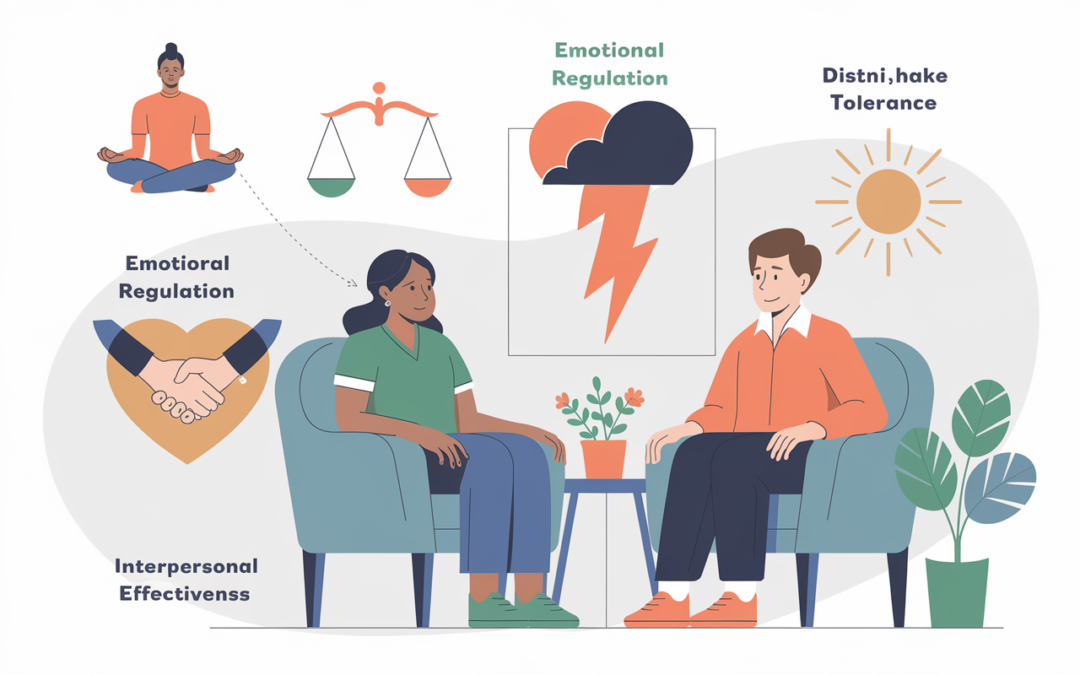
From DBT, you should be able, in some way, to both accept things and to promote change. Mindfulness-based and cognitive-behavioral techniques are used, and it is taught in four major modules:
Mindfulness: Dialectical behavior treatment includes use of principles of mindfulness. Individuals are taught ways of being in the present moment while avoiding the judgments. When someone learns this skill, they become more aware of their thoughts and feelings, which helps them answer more carefully instead of quickly.
Distress Tolerance: People who take this module will learn how to deal with strong feelings and crises without acting in harmful ways. People are often taught techniques like extreme acceptance, self-soothing, and distraction.
Emotional Regulation: People who take this module learn how to recognize, understand, and control their feelings. This means making people less emotionally vulnerable and giving them more good emotional experiences.
Interpersonal Effectiveness: In this lesson, you will gain knowledge on how best to communicate or approach people and establish rapport with the right manner. This way, the other teaches people how to say no and state their boundaries, ask for what they want, and handle conflicts in relationships.
Delivery Formats of DBT: There are two main ways that dialectical behavior treatment is usually given:
- Individual Therapy: Individual therapy is when you meet with a therapist alone to work through specific problems and use DBT skills.
- DBT Group Therapy: When people go to DBT group therapy classes, they learn and practice skills with others in a safe space.
Phone coaching is often available for real-time help and guidance in both formats.
Is Dialectical Behavior Therapy Effective?
A lot of study and writing has been done on how well dialectical behavior therapy works. Many people with mental health issues believe it to be one of the best ways to get better.
Conditions Treated with DBT
Borderline Personality Disorder (BPD): DBT was initially developed specifically for people like those with BPD and it remains the gold standard. Research conducted on the same reveals that a great deal of reduction in self-harm, suicidal intentions and mental instability.
Depression and Anxiety: Self Managing Antidepressant SSRI and DBT behavior therapy for sadness and anxiety have been revealed to support patients dealing with their conditions through adopting appropriate strategies of behavior.
Substance Use Disorders: In DBT targeting distress tolerance and mindfulness has been of benefit to people suffering from addiction especially because they have been able to reduce the level of vulnerability of relapse and have enhanced the individuals’ emotional resilience.
Eating Disorders: DBT is for individuals with eating issues like bulimia and binge eating by coaching them on improved approaches to manage stress and emotional factors.
Evidence Supporting DBT’s Effectiveness: Research shows over and over again that dialectical behavior treatment is helpful:
- I found an article in the American Journal of Psychiatry that reported DBT effective in retaining individuals with BPD in treatment and reported fewer suicidal ideas and acts.
- A systematic review that got published in the journal Cognitive Behavioral Therapy in 2020 showed that individuals who had mood difficulties had better ways of managing their feelings with the help of DBT.
Why DBT Works
Dialectical behavior treatment works because it looks at the whole person. It gives people useful tools to handle their feelings and encourages self-compassion by talking about both acceptance and change. The group treatment part makes people feel like they are part of a community and helps them learn from each other, which makes it even more effective.
Final Thoughts
Due to its structured style and group dynamics, DBT group therapy may not be right for everyone. However, for many, it is still a very helpful tool. When done hand in hand with individual therapy, it provides a system of handling emotional issues besides improving overall wellbeing.
DBT has been found useful in treating individuals with emotion regulation, interpersonal relationship or other mental disorder issues. DBT aims to provide those who struggle with the necessary skills to deal with life by well-explained concepts like mindfulness, emotional regulation and interpersonal effectiveness.
If you’re considering therapy to boost your mental health, DBT could be a huge step toward a better live. This is true whether you do it alone or in a group.
Behavioral Therapy
Behavior therapy is now a key part of mental health treatment. It helps almost all psychological issues using an evidence-based approach. The most widely used treatment described above is DBT treatment and CBT. While many of them share certain similarities, they remain very distinct in what they focus on and how they are applied. But what is dialectical behavior therapy? How does it relate to cognitive behavioral therapy? What techniques set DBT apart?
What is DBT Therapy?
It is known as dialectical behavior therapy and was introduced in the late 1980s by Dr. Marsha Linehan. This treatment was first for borderline personality disorder. It has since been used for other mental health issues, such as depression, anxiety, and eating and substance use disorders.
The word ‘dialectical’ defines the balance between two opposites: acceptance versus change. DBT stresses understanding and validating one’s emotions. It also supports growth and change.For this reason, this two-pronged approach makes DBT treatment very helpful for those who are having strong difficulties with emotions, self-destructive behaviors, or relationships.
Core Components of DBT Therapy
DBT therapy typically consists of four main components:
Individual Therapy: Clients, supervised by a therapist, work to tackle personal challenges. They set goals and learn coping strategies. Group Skills Training
Group Skills Training: Group sessions teach useful skills in four areas: controlling emotions, being aware, dealing with stress, and getting along with others.
Phone Coaching: Support is provided after sessions. It is for clients to work through DBT skills in real time ‘in the moment’.
Therapist Consultation Teams: Consultation groups are held so therapists can work together. The goal is to provide effective, kind care.
What Are the Differences Between CBT and DBT?
CBT and DBT are two evidence-based, behavioral techniques. Each focuses on a patient’s needs in a different way and has a different application. Here are some key differences in detail:
Focus
- Cognitive Behavioral Therapy (CBT): The CBT pursues negative thinking patterns, which yield negative feelings and behaviors. The treatment itself is goal-oriented and teaches the patient how to do things which just work in opposition to such cognitive distortions, catastrophizing, or Black and White thinking.
- Dialectical Behavior Therapy (DBT): It’s the same as DBT therapy because it addresses it. But, it is not the same. It manages emotions and builds social skills. DBD uses a dialectical approach. It balances acceptance of a person’s experience with a need for change.
Techniques
CBT:
- Cognitive restructuring
- Behavioral activation
- Problem-solving
- Exposure therapy
DBT:
- Mindfulness exercises
- Emotional regulation techniques
- Distress tolerance strategies
- Skills of interpersonal effectiveness
Target Population
CBT: Anxiety, depression, phobia, and PTSD are common conditions that it currently treats.
DBT: Dialectical behavior therapy helps patients with:
- extreme emotional dysregulation,
- chronic self-injury, or
- borderline personality or eating disorders.
Approach to Emotions
CBT: Makes an effort to change the thought behind the emotion.
DBT: It teaches people to feel their emotions, without judgment or avoidance, and to let them go.
Knowing these differences can assist individuals and therapists deciding an approach that suits them.
What Are Dialectical Behavior Therapy Techniques?
The practical techniques in dialectical behavior therapy are a strong point of this approach. They improve emotional and social skills. Here are the four main skill areas taught in DBT:
Mindfulness
DBT therapy is founded on mindfulness. It means being fully present and accepting, without judgment, whatever is happening in your body. This includes your mind, emotions, and physical state. Mindfulness helps clients to see and respond, not react.
Example Techniques:
- Counting your way through FOMO’s meaning.
- Focusing on your breath when you’re engaged in grounding exercises.
Emotional Regulation
Skills in emotional regulation help with how to manage intense emotions that can feel like too much to bear or do anything about. These techniques aim at knowing about emotion, not being vulnerable to negative emotion, and generating positive experience.
Example Techniques:
- That is, labeling emotions.
- A self care routine to create emotional vulnerability.
- The use of opposite action (e.g., smiling while feeling sad).
Distress Tolerance
Distress tolerance skills are abilities for a person to stay afloat when in the middle of turmoil and avoid using substances and self destructing behavior. They focus on learning healthy ways to bear what could be distressful.
Example Techniques:
- We use the TIPP method of Temperature, Intense exercise, Paced breathing, Progressive relaxation.
- This means practicing radical acceptance, the idea of trying to willfully accept situations that you can’t change.
Interpersonal Effectiveness
Skills that help clients overcome interpersonal difficulty include teaching clients assertiveness, active listening and boundary setting. They are particularly useful to improve communication as well as conflict resolution.
Example Techniques:
- In other words, DEAR MAN (Describe, Express, Assert, Reinforce, Mindful, Appear confident, Negotiate).
- The FAST motto is Fair, Apologies avoided, Stick to values, and Truthful.
And by mastering these techniques, learning how to better handle emotion and evolving relationships, clients can achieve better emotional balance.
What Type of Therapy is Behavioral Therapy?
Behavioral therapy is a collective term for those therapeutic approaches which emphasize the alteration of harmful behaviors. It contains the belief that by learning something is learned, and can be unlearned or substituted with healthier alternative.
Key Characteristics of Behavioral Therapy
Action-Oriented: It focuses on what you can do to change particular behaviors, not what lead you to those behaviors in the past.
Goal-Oriented: Clients and therapists sit down together to establish measurable, realistic goals.
Evidence-Based: As we know, behavioral therapy bases its techniques on science.
Short-Term: Structured, on a short term time basis.
Types of Behavioral Therapy
CBT (Cognitive Behavioral Therapy): According to the fact, comprehensive treatment involves behavioral techniques along with cognitive intervention to deal with thought and behavioral patterns.
DBT (Dialectical Behavior Therapy): A behavioral therapy subset, it combines acceptance and change of emotional and interpersonal challenges.
Exposure Therapy: This therapy is used for anxiety disorders and involves making someone who is anxious very slowly uncover his fear.
Behavioral Activation: It is often used for depression because it encourages clients to do positive activities to help improve mood and lower avoidance.
Accompanied by versatility and effectiveness, behavioral therapy is a cornerstone of mental health treatment for conditions.
Conclusion
There are powerful tools with behavioral therapy to assist people in navigating with emotional and mental obstacles. CBT and DBT are among its methods of treatment that are effective and flexible. Unlike CBT, DBT focuses on balancing acceptance and change, or what accepting and changing something might look like, – and that makes it an especially helpful tool for emotional regulation and interpersonal challenges.
So they could begin to understand how dialectical behavior therapy—skills including mindfulness, distress tolerance and emotional regulation—form a toolbox of skills to help themselves cope with life’s challenges. These evidence based strategies if you’re wondering what behavioral therapy for you or someone you love is all about really lay a solid foundation to improving your mental health and wellbeing, hands down.

Health and Fitness, Health Care
There is a lot of worry, anxiety and depression we deal with to day. Mindfulness is becoming powerful tool for minds health. Science backs the way to healing, and mindfulness based therapy is the practice of old with modern psychology. Mindfulness-based therapy can help people deal with trauma, anxiety, and sadness. In this blog post, I talk about some of those benefits.
What Are the Advantages of Mindfulness-Based Therapy?
Mindfulness-based therapy, or MBT, is a type of therapy that is based on set times and uses mindfulness practices like meditation and deep breathing in treatment settings. This way of understanding the problem is called MBT (based on mindfulness techniques and designed to make people emotionally strong, self-aware and less stressed). Now let’s look at its pros:
Reduces Stress and Anxiety
Telling people to focus on the present moment without judging it helps people of all types to feel less stressed. It also gives the mind a little time, between a stimulus and a response so worry doesn’t grow any more.
Improves Emotional Regulation
Mindfulness-based treatment helps people figure out what makes them feel bad and how to deal with it. People who deal with strong feelings or mood disorders will benefit a lot from learning this skill.
Boosts Focus and Concentration
Mindfulness exercise changes the way the brain works so that you can focus and pay attention better. In addition to helping with therapy, this benefit also makes daily tasks and decisions easier.
Strengthens Resilience to Adversity
MBT helps people find inner peace, which makes it easier to handle the trials of life with strength and grace.
Supports Holistic Well-Being
Mindfulness-based care, in turn, addresses the whole-person approach in terms of the mind, body, and spirit. It tends to work effectively alongside other treatments for mental health, such as drugs or cognitive behavioral therapy.
MBT is an excellent method for augmenting overall mental health and physical feeling of well being as it is very easy to use and very easy accessible.
What Is Mindfulness Therapy for Anxiety?
Also, it has been used to treat anxiety. Mindfulness keeps people present, not trapped in a cycle of bad thoughts that makes them anxious. Many people are stressed because they think too much about a future that is not known. On the other hand, mindfulness helps people to focus on the present.
How It Works:
- Awareness of Thoughts: Anxiety thoughts will be watched by the individual with the help of mindfulness therapy, without making judgments. Instead, they let those thoughts pass by, like clouds passing in the sky.
- Body Scans and Relaxation Techniques: Individuals let go of tension, stored in muscles, through guided body scans. This tension is usually linked to anxiety.
- Breathing Exercises: Deep breathing in mindfulness slows the heartbeat, thus activating the parasympathetic nervous system to undertake this calming action.
- Non-Reactivity Practice: The concept of mindfulness itself is to respond and not react to anxiety-producing situations, therefore avoiding impulsive or panic-driven behavior.
The first thing that these techniques do within the mindfulness therapy is to aid one break away from the shadow of the anxiety and lead to peace.
What Is the Role of Mindfulness in Trauma Recovery?
This trauma can pull the cords and leave us so disconnected from ourselves and the world around us, it pulls the cords of what we are, and what is going on around us. Trauma recovery is impossible without mindfulness – it’s the safe and gentle form of reconnection with the present moment, which removes the emotional shards of past pain.
Why Mindfulness Is Effective for Trauma:
Fosters Safety and Grounding: Frequently trauma survivors feel stuck in fight-or flight responses. Mindfulness helps them be grounded in the present, feel safe.
Regulates the Nervous System: Meditation and deep breathing are examples of mindfulness practices that help to activate the body’s natural state of relaxation, or appreciation, and balance an overactive nervous system.
Encourages Self-Compassion: Survivors may feel guilty, ashamed or blame self. Self compassion is nurtured by mindfulness because then they can process their emotions without judgment.
Reduces Flashbacks and Intrusive Thoughts: Growth awareness of the present reduces the frequency and power of flashback that are anxiety and trauma oriented.
And for people who were survivors, it’s a powerful tool for regaining power in their life using the skill of mindfulness.
How to Treat Depression Through Meditation and Mindfulness?
People with depression think negatively, have perpetual sadness, and lose interest in things that they once loved. Therapy and medication remain absolutely essential ways to treat sadness the old-fashioned way. However, paying attention and meditating are excellent for a person, too.
The Science Behind Mindfulness and Depression:
The prefrontal cortex and the amygdala are two parts of the brain that change upon doing Buddhism. These changes:
- Slow down the activity in parts of the brain that are linked with having bad thoughts and reflection upon them.
- If you work on how you deal with your feelings, your mood will be more stable.
- Better learn how to deal with stress, which is a big cause of depressive episodes.
Steps to Incorporate Mindfulness for Depression:
Daily Meditation Practice: For 10 to 20 minutes every day, you should do mindfulness meditation. Pay attention to your breath, your body, or the sounds around you. Take small steps to bring your mind back to the present.
Gratitude Exercises: Mindfulness-based gratitude exercises can help people with sadness stop thinking about the bad things in their lives and start focusing on the good things.
Mindful Walking: As you walk, meditate by focusing on each step, the ground beneath you, and the things around you. This technique combines mindfulness with exercise, which makes you feel better.
Mindful Journaling: Don’t judge yourself as you write down your feelings and thoughts. Going back and reading what you wrote in your book can help you see patterns and understand how you feel better.
Mindfulness and meditation can help people get out of a negative thought loop and feel like they have a reason to live.
Final Thoughts
At Better Lives, Building Tribes, we believe that awareness is one of the most important ways to heal emotionally. Mindfulness gives people the tools they need to handle life’s difficulties with grace and strength, whether they use it in trauma recovery, mindfulness-based therapy, or meditation for depression.
As we do these things, let’s strengthen the bonds between us and our communities and make mental health a top concern in the world. We can make lives better and groups that do well if we work together.

Health and Fitness
With life being so busy and lots of social pressure to be ‘perfect’ at everything, mental health matters a lot. Brain based therapy and other good mental health techniques are shifting how we think about mental health. This new treatment should be talked about and more about mental health should be discovered. Therefore we should also search for nice way to help people who are mentally ill. Also, I want to say a few words about why therapy is so great for you — why it’s so important for you.
What is Dialectical Behavioral Therapy in Specific Terms?
DBT is a structured type of brain based treatment based on these ideas. The goal is to assist someone in coping with them, to be more conscious, and to get on with the others around them. Dr. Marsha Linehan created DBT as a way for people with borderline personality disorder (BPD) to take advantage of it. But since then it’s changed, today it’s a good way to tackle issues like eating disorders, grief and even anxiety.
The treatment is based on the idea that it is dialectical, which means it tries to change things while also accepting them as they are. These things help keep the balance:
- Mindfulness: But then how do you teach people to be mindful because you have to keep people in the present moment where there isn’t a lot to that emotional response.
- Distress Tolerance: People can get education on what to do to handle and take in painful feelings without acting out in hurtful ways. We refer to this as ‘distress tolerance.’
- Emotion Regulation: Emotion control is learned by helping people to identify, feel, name and manage their feelings in a constructive manner.
- Interpersonal Effectiveness: Provide people with the tools they need to heal the relationships, and to set the boundaries. This is what interpersonal effectiveness means.
DBT changes the game in mental health because its core parts not only help people break bad habits, but they also make them stronger and more self-aware.
What is Mental Health?
A state of a person who is emotionally, mentally, and socially well. Every day it makes us think, feel, and act differently. Mental health does not just refer to not having a mental illness; it also refers to being able to handle stress, make friends, and choose wisely.
You cannot say anything bad about mental health. It affects everything in our life, starting with our relationships and ending with work. Worry, sorrow, and other disorders that make your life less pleasant are just signs that your mental health is not going well.
It’s not as shameful to talk about it, but there are still problems; many times, people don’t get the mental health they need because they do not know how to get to or understand the tools. Setting a goal for mental health is good for growth, not just yours but others, too.
What Methods of Mental Healthcare Do You Find Effective?
There are many different types, and each one fits a person’s wants and preferences. There isn’t one specific method to help everyone, but the methods listed here seem to work very well:
Therapy (Psychotherapy)
Mental health treatment is based on therapy. Your options may include dealing with a professional who can assist an individual in working through their emotions, understanding behaviours, and ways that they can do better in a future future situation like cognitive behavioral therapy, dialectic behavioral therapy or psychodynamic therapy.
Medication Management
The medicines that the psychiatrists prescribe may change patients’ mental health condition in a great way. Mood stabilizers, antidepressant, and nervousness medications are included in some of the medications.
Mindfulness and Meditation
The mindfulness techniques that help reduce stress and hence make your emotional health good include meditation, yoga and deep breathing exercises. These methods correlate well with the dialectical behavioral therapy awareness part.
Lifestyle Adjustments
But also important for your mental health is getting enough rest, exercising and eating a healthy diet. The truth is that there is a link between mental and physical health, and so it can often take care of one helping the other.
Support Groups
Being able to join a group of people who are going through the same problems can help you feel as if you fit and that your problems are being understood. Support groups also offer open conversations, which help do away with the shame that surrounds mental health.
Creative Outlets
Journal writing, art therapy, and music therapy are creative ways of dealing with emotions and memories. The convenience of the techniques is that they can easily be done along with standard therapy.
How each measure works for each individual depends on personal circumstances; however, more often than not, the best results come from using more than one method together.
Why is Therapy Important for Mental Health?
The following will explain why anyone, regardless of their struggle, can better their lives through therapy. It will also review the importance of therapy in mental health:
Promotes Emotional Healing
Sometimes, the tough things that happen in life, leave really deep scars in our minds. There is a place to attempt to get through and face your feelings without being judged. That assists in you healing and finding out a lot more about you.
Encourages Self-Awareness
People seek therapy to find out why we come to believe do what we do. The first thing you can do to make things better is to realize it can be done. There are methods, such as dialectical behavioral treatment, which emphasize this sort of self-reflection.
Builds Coping Mechanisms
There is so much stress in life, but it’s all about how one handles it. People who go to therapy learn good ways to handle stress, worry, and issues.
Enhances Relationships
For relationships to be healthy, both people need to have good social skills. People learn how to speak clearly, set limits, and keep relationships strong through therapy, especially DBT’s interpersonal effectiveness module.
Reduces Stigma
Going to therapy makes getting help seem normal, which encourages others to put their mental health first without feeling ashamed or afraid of being judged.
Prevents Escalation
Problems with mental health can be stopped before they become problems by going to therapy. When help is given early on, people often get better and heal faster.
People can experience deep growth and better health by incorporating treatment into a larger mental health care plan.
Final Thoughts
We at Better Lives Building Tribes think that happy, healthy people are the key to happy, healthy communities. Taking care of mental health issues with kindness and useful methods, like dialectical behavioral therapy, builds strength and connection. Mental health care is an investment in a better future for everyone, whether it’s through therapy, changes to one’s lifestyle, or artistic outlets.
Let’s get rid of the shame, enjoy the trip, and form groups that help each other live better lives.

Health and Fitness
People get better, learn more about themselves, and become stronger through therapy. They can deal with problems in their lives and mental health issues better because of this. Treatment comes in many forms, each designed to help with a specific issue. These include dealing with trauma, fixing problems, and reaching personal objectives. We are going to talk about some problems with solution-focused treatment in this blog post. Along with its pros and cons, the main goals of trauma therapy will also be talked about.
What is Problem-Focused Therapy?
In problem-focused treatment, the goal is to find and fix certain problems. It is a structured and limited type of therapy. This method is not like therapies that look into deeper parts of the mind or bigger parts of life. This method is focused on solving the problems people are having right now.
Key Features of Problem-Focused Therapy
Defining the Problem: The first thing you need to do is figure out what’s making you unhappy. Something like a fight at work, stress over money, or issues in a relationship could be this.
Understanding Contributing Factors: To help the person figure out what’s wrong, the therapist looks at patterns of behavior and things in the person’s surroundings.
Actionable Strategies: Making plans for how to deal with the problem is a big part of treatment. This can mean making changes to your daily life, learning new skills, or finding better ways to talk to people.
Measuring Progress: Problem-focused treatment, on the other hand, keeps a close eye on progress to make sure the client gets real results.
Who Benefits from Problem-Focused Therapy?
- For people with particular problems, such as choosing one’s career or resolving relationship conflicts.
- Those in need of a structured and results oriented way to go about addressing issues.
Problem focused therapy is good for treating immediate issues but not so good for things like deep emotional issues or trauma, which usually demands more in depth forms of therapy.
What Are the Limitations of Solution-Focused Therapy?
Solution focused therapy is a short term approach, emphasizing solutions and bypassing problems. The main purpose of it is to support people to concentrate on their strength and resources to work on concrete plans to enhance.
Strengths of Solution-Focused Therapy
- It is short and goal oriented, resulting in time saving.
- It’s an empowering approach around what the client can do, not what they can’t do.
- It sets a positive tone, a forward looking mindset.
Limitations of Solution-Focused Therapy
Superficial Problem Analysis: The biggest limitation of solution focused therapy is that it focuses little on figuring out the “cause” of the problem. It means that instead of solving your issue once and for all, you often get temporary fixes.
Not Suitable for Complex Issues: The approach may not be as deep as some people need it to be if you’re someone who has experienced trauma, deep emotional struggle or a chronic mental health condition.
Overemphasis on Solutions: This sounds helpful in terms of trying to find solutions, but benefits of a solution may fail to address emotional needs, unresolved problems, or experiences of the individual.
Client Readiness Matters: Due to reliance on client articulation of goals and solutions, solution focused therapy relies heavily on the client. For those who are exhausted or ill motivated, this can be quite challenging.
In summary, tentative but strong thesis has been proposed, based upon this, the best method of attaining the short term goal is solution focused therapy, and not a nice tool to long term emotional or psychological healing.
What Are the Benefits of Trauma-Focused Therapy?
Trauma focused therapy treatment is specifically designed therapy for doctors to help the person process their traumatic experiences so much that they can get better and heal. Mental health, relationships, and general overall well being are all profoundly impacted by trauma and this therapeutic approach looks at how you impact it directly.
Key Benefits of Trauma-Focused Therapy
Addressing the Root Cause: By contrast, the specific thing (or things) that occurred, that were a part of the trauma, are what trauma focused therapy considers. People tend to deal with root cause and can hence choose to understand their feelings and then heal.
Improved Emotional Regulation: To go through a traumatic event, you may specifically feel worry, anger, or sadness. Therapy that focuses on trauma teaches people good ways to deal with feelings.
Reduced Symptoms of PTSD: People with PTSD can dream, flash back, or just feel too aware. Because this kind of treatment allows them a safe place to talk about and reframe the traumatic event, people tend to feel better.
Strengthened Relationships: Trauma stress can also make it hard to get along with other people at work and in your home. Trauma therapy provides people with the tools they need to find their confidence, speak better and make healthy connections.
Empowerment and Resilience: One of its biggest benefits is helping people to deal with trauma in a healthy way. The clients who change and get better by getting into their heads and then moving out of the bad thought process are the ones who can get back control of their lives.
Who Can Benefit from Trauma-Focused Therapy?
- People who have been abused, assaulted, abused, or suffered accidents.
- Those who have symptoms of PTSD.
- For anyone who’s dealing with the long term side effects of trauma to mental health and relationships.
What Is the Goal of Trauma Therapy?
Trauma therapy aims to help a person heal from emotional and psychological consequences of traumatic experiences and to begin to learn again life. But living with trauma can keep things from normal, and can break up relationships, and can cause mental health problems like anxiety and depression and PTSD. The idea behind trauma therapy is to restore a feeling of safety, control, and well being.
Key Objectives of Trauma Therapy
Processing Trauma Safely: Part of the purpose of trauma treatment is to create space in which people can talk about and figure out what happened to them. This means, often, talking about memories and feelings in relation to the experience.
Developing Coping Mechanisms: Traumatized individuals experience feeling overwhelmed or feeling pointless. Trauma therapy teaches people the ways in which to manage/cope with fear, stress, and feeling in healthy ways.
Rebuilding Self-Esteem: Hurt bad things can hurt your confidence and self worth. Emotionally healing through trauma therapy aims to help people go from being unable to form a respectful and positive view of their own continued existence, to believing they will one day live a fulfilled life.
Restoring a Sense of Normalcy: The purpose of trauma therapy is to get people back in control of their life. It means helping clients to rebuild relationships and routines and begin to lessen the day to day effects of trauma.
Preventing Long-Term Impact: If trauma is not dealt with, it can cause long lasting mental health problems. They seek to lower these risks through trying to treat trauma early and in depth.
Conclusion
Different people on their path to healing and growth may benefit differently from different kinds of therapy. Problem focused therapy is where we give practical solutions for specific problems, whereas solution focused therapy focuses upon giving clients a way to see and then achieve their goals, but is limited with some conditions. However, trauma focused therapy and therapy based on trauma offers deep, focused support for those who have been impacted by trauma, and help them heal, boost resilience, improve emotional regulation, and achieve long term recovery.
At Better Lives Building Tribes, we know that therapeutic approaches can be effective if they are tailored to someone and deliver a stronger, healthier life. The right therapy can help your address everyday challenges or recover from a trauma.
Find out how these astonishing ways can help you get to be a much better, a lot more empowered variation of yourself.

Health and Fitness
Thanks for coming to Better Lives Building Tribes. The things we want to do are help people improve their minds. There are different kinds of therapy for anxiety. This blog post talks about how therapy can change people’s lives and help they deal with sadness and anxiety. Read about these diseases and the way to treat them before you overcome dry and unhealthy lives.
What Is a Common Therapy Used to Treat Anxiety and Depression?
The most common mental illness is to become stressed or sad. They happen together a lot and make everyday life very different. Good news: both diseases have medicines that have been shown to work.
One of the best and most famous ways is cognitive behavioral therapy or CBT.
How CBT Works for Anxiety and Depression
Identifying Negative Thought Patterns: CBT helps people see the wrong way of thinking that makes them sad and anxious.
Reframing Thoughts: The therapy is making people change negative thoughts into good and healthy thoughts.
Behavioral Strategies: However, CBT is based on steps you can take—people who suffer from anxiety can get help from exposure therapy, for example, or people struggling with depression can be encouraged to think of things to do—to help people learn how to make changes that will last.
CBT works, many studies have shown and that is one of the reasons why people with anxiety and depression are commonly treated this way. It is usually offered one-to-one or in groups and can be modified to suit your needs.
Other common therapies include:
- Dialectical Behavioral Therapy (DBT): Good to control strong feelings.
- Interpersonal Therapy (IPT): It was about easing the symptoms by improving the relationships.
- Mindfulness-Based Cognitive Therapy (MBCT): It is mindfulness practice combined with traditional CBT.
What Are the Different Types of Anxiety Therapy?
Therapy doesn’t work the same way for everyone who has worry. Every type and amount of anxiety is different, and each type of therapy can help. These are the best ways to finish what you need to do:
Cognitive Behavioral Therapy (CBT):
- was thought to be the best way to calm down.
- tries to figure out and change the thoughts that keep fear and worry going.
- As an example, exposure treatment puts people in a safe place to face their fears.
Exposure Therapy:
- Many people who have fears, social anxiety, or PTSD find this type of therapy, which is a subset of CBT, very helpful.
- Time spent growing accustomed to things or events that scare you are less likely to take flight and more confident that you can handle them.
Acceptance and Commitment Therapy (ACT):
- tells people to not try to hide how they feel but to accept them.
- It helps people make sure that what they do is in line with their ideals, which makes everyday life less stressful.
Eye Movement Desensitization and Reprocessing (EMDR):
- Often used for stress-related worry, like PTSD.
- Guided eye movements and mental recall are used together to help people deal with traumatic events again.
Mindfulness-Based Therapies:
- includes things like body scanning and meditation that can help people stay present.
- Lessens the cycles of negative thoughts that are common in people with sadness and anxiety.
Psychodynamic Therapy:
- looks at unconscious patterns and past events that have led to present anxiety.
- focuses on understanding yourself and your feelings.
Benefits of each anxiety therapy type can vary and they all can be changed as desired ensuring complete healing.
What Role Does Therapy Play in Treating Anxiety?
Important part of mental health care, therapy provides people with anxiety that tools, support and methods to be able to work problems. Here are some ways that treatment can change things:
Providing a Safe Space:
- It’s safe to talk about your worries and fears in there.
- Being able to share freely might help ease those that suffer from anxiety that often feel alone.
Identifying Triggers:
- A therapist can help people get to the bottom of what thoughts, feelings or patterns cause anxiety.
- The first thing you need to know in order to deal with this triggers successfully is knowing these triggers.
Building Coping Mechanisms:
- We learn in therapy useful ways to cope with stress, anxiety, and the like.
- Many of us are taught things like progressive muscle relaxation, mindfulness, breathing exercises.
Fostering Resilience:
- Depending on how long you are subject to therapy for, this can actually make you stronger emotionally when the time comes, thus making it easier to solve current problems in the future.
- Dealing with the causes of your anxiety lets people recognize who you are.
Helping Enabled Behavioral Changes:
- Cognitive behavioral therapy (CBT) and other therapies attempt to reform bad habits and the way we think.
- As a result, people are less likely to avoid situations and bad situations, are better to deal with people and feel much more confident.
Complementing Medication:
- Help can be given in the way of medication, but treatment is treating the problem at its source (root), rather than simply treating the symptoms of the problem.
- Combination of treatment sometimes work best for people with severe anxiety and sadness.
Not only does treatment help with the feeling of being overwhelmed by anxiety but also wins for their whole mental health by offering the proper tools and helping them live fuller lives.
Conclusion
Anxiety and sadness are complicated conditions, but there is hope and healing through effective treatments. With CBT, exposure therapy, or mindfulness-based practices, anxiety treatment gives people the tools they need to deal with the problems they face in life.
We at Better Lives Building Tribes think that the first step to taking back your mental health is to know what your choices are. While therapy makes people feel better who have anxiety, it also has the effect of making people more self aware, stronger, and better over time.
If that sounds like you (or someone you care about), you might book an appointment with a mental health professional about the best way to help. Remember, this never happens overnight. The first step is a step in the right direction to a healthier future.

Health and Fitness
What Are the Best Behavioral Health Solutions?
Everyone needs to know this today. It’s important to know how to handle mental health problems. Behavioral health is about how our thoughts and actions affect our mental, emotional, and social health. It includes both mental disorders, like anxiety and sadness, and lifestyle factors. These are what you eat, how active you are, and your drug use.
The best solutions to mental health are when psych evals consider it as a whole. They should find ways to help people care for their mental health. They should also provide the tools and help needed. Some of the best options for mental health problems are:
Therapy and Counseling
Effective method of dealing with problems of mental health is therapy. One type of therapy where people are taught to change their thinking, feeling, and doing is called Cognitive Behavior Therapy. Other forms of therapies that can have people change their ideas, feelings, and behaviors based on are dialectical behavioral therapy and solution focused therapy.
Medication
For some, this is vital for managing mental health and the medication.. Mood stabilizers, antidepressants, and anti-anxiety drugs can help. They stabilize brain chemistry and guard against the side effects of mental illness.
Mindfulness and Stress Management
Deep breathing, yoga, and mindfulness meditation can lower stress. They can improve emotional control and mental health. Those people can do these things. They stay calm and present. This keeps life’s stresses from getting to them.
Support Groups
People get support in support groups and group treatment and it makes them feel they’re a part of a community. It’s about being with others who have the same things as you. It makes you feel less alone and may help you get better faster.
Lifestyle Changes
For mental health, it’s key to exercise, eat well, sleep enough, and have good relationships. To boost your mental health and happiness, change your lifestyle.
Using a mix of these methods can improve mental health. It can boost quality of life and increase emotional resilience.
How Can Counseling Improve Your Mental Health?
Mental health counselling helps people understand, handle and address their mental health. Counselors provide a trained professional’s support. They offer a nonjudgmental space for people to explore their emotions and identify their triggers. They help them face challenges together.
There are several ways in which mental health counseling can significantly improve your mental health:
Developing Coping Skills
The biggest benefits of mental health counseling are coping strategies. You can learn appropriate responses to stress, anxiety and depression and other emotional issues from counselors. Coping skills will help you go through life’s problems means with less emotional setback.
Building Self-Awareness
Counseling will help individuals become more self aware. To break unhealthy patterns, we must understand the root causes of their emotions and behaviours. This will help us respond more healthily and balance to situations.
Improving Relationships
Mental health counseling can help people improve their communication with loved ones. It can help them understand their partner’s feelings. It can also help them express their own feelings. This can help maintain personal relationships.It also helps us regulate our emotions and understand social dynamics. This, in turn, improves our romantic and family relationships.
Managing Mental Health Disorders
It’s good counseling if you’re diagnosed with a mental health issue, like depression, anxiety, or PTSD. Also, bipolar disorder. Therapeutic techniques can help people cope with their symptoms. They can reduce stress and improve mood.
Promoting Personal Growth
Counseling is about helping an individual work through stagnation or dissatisfaction feelings. Therapy aims to set personal goals. It seeks to create plans for positive change and growth.
Restoring Hope and Motivation
Mental health issues can make you feel hopeless. In mental health counselling, you can talk about feelings. Then, you can find new perspectives. Often, as individuals work with a counselor, they regain hope and motivation.
With good counseling, ones mental health can be improved substantially to lead to a more full and balanced life.
What Should I Expect in Mental Health Counseling?
If you are considering mental health counseling, here are some general things you may want to know and expect. Counselling is a trend you may see with it. But, it differs by your therapist’s approach and the nature of your challenge.
A Safe, Nonjudgmental Space
Counseling is a place to talk, safe and nonjudgmental. It’s a judgment-free zone for all her feelings. A counselor who listens and ends this by saying your feelings are valid. You feel that nobody hears or understands you.
Initial Assessment
Many times the therapist will make some kind of assessment during a couple of sessions. The take some background information as well as some problems and some goals for therapy. It may include, but is not limited to, personal history. This includes known mental health issues, past experiences, and current work.
Collaborative Goal Setting
The great thing about mental health counseling is the goals you’re showing your counselor. Goal setting gives direction in therapy. It sets clear success benchmarks. It can reduce anxiety, regulate emotions, or change specific behaviors.
Therapeutic Techniques and Strategies
A therapist will apply those techniques and strategies that work best for you, based on whatever condition you must deal with. It may range from Cognitive Behavioral Therapy, which addresses the restructuring of negative thought patterns, to talk therapy channeled toward exploring feelings, to even more specialized kinds, such as trauma-focused therapy targeted toward people who have suffered some kind of trauma or are still in it. Technique application depends on your need.
Regular Check-Ins
During the course, your counselor will monitor your progress and alter the treatment plan when necessary. Such an ongoing collaboration will help you stay on course and guarantee the effectiveness of the therapy.
Empathy and Support
A counselor won’t help only with advice, but also through empathy and showing understanding. Their role is to walk you through those challenging emotions in a manner that eventually directs to poor mental health care and find ways and strategies for you to take healthy care of yourself.
Confidentiality
The consultation is absolutely confidential, which means the counsellor should not reveal any information about your session unless it will include the putting of one’s life or others in danger. This type of confidentiality allows opening up and being truly honest with oneself in sessions.
What Is the Process of Mental Health Counseling?
Mental Health counseling is a process so you can overcome these obstacles and they work through them with you. While every counseling experience is unique, the general process can be outlined as follows:
Initial Intake and Assessment
The intake session is an early step in mental health counseling. Your counselor will ask about your personal and mental health histories, and your current issues. The best use for it is so your counselor can understand your needs better.
Setting Treatment Goals
After we assess your struggles, we’ll set specific goals for each of your counseling sessions. Some goals might be to reduce anxiety, relax, or improve relationships. They could also be to address mental health issues.
Therapy Sessions
Typically, counseling for mental health is one on one with your therapist. You can take some of these sessions. They may allow you to discuss your thoughts, feelings, or actions in detail. You can learn new ways to cope with your mental health challenges. You could even practice some new coping strategies you develop.
Progress Evaluation
Your counselor will check your progress towards your goals, from time to time. They may adjust the treatment plan if needed. This will keep the counseling process effective and meet your needs.
Ongoing Support
However, even after you reach your first goals, try therapy or seeing a therapist now and then. It can help prevent a relapse into old, negative patterns. Counseling can help you, in the long term, to stay mentally well. It can also help you deal with new challenges as they arise.
Ending Therapy
Finally, it’s usually a shared decision with your counselor at the end of mental health counseling. However, as you reach your goals and trust your mental health tools, therapy may end. But, many people then choose to schedule follow-up sessions as needed.
Conclusion
It can take the step towards mental health counseling and it can change your life. Counseling is very beneficial. It can help with mental health issues, support personal growth, and boost your emotional well-being. At Better Lives Building Tribes, we offer a full suite of support. We can guide you through the thorns of mental health. We will appreciate your feelings, understand why, and teach you time-tested self-care methods. Join us today. Start your journey to better mental health. Build a healthier, happier future.

Health and Fitness
What Is EMDR Therapy Used For?
Eye Movement Desensitization and Reprocessing (EMDR) is a therapy that might assist an individual in coping with and processing troubling events. EMDR therapy was discovered in the late 1980s by psychologist Francine Shapiro. EMDR therapy is very effective for patients who suffer from trauma or PTSD. EMDR follows to plan how to tackle the traumatic memories via guided eye movements and other types of bilateral stimulation. This lessened the emotional effect of those memories and helped the mind heal further.
Disorders linked to trauma EMDR treatment is used for example
Post-Traumatic Stress Disorder (PTSD): This technique is particularly effective for individuals with PTSD as it assists in reprocessing traumatic memories that causes sleep disturbances, nightmares, and general discomfort.
Anxiety Disorders: EMDR can assist those with anxiety associated with past memories, events or situations to reduce their distress.
Depression: It has proven successful for someone who is having depressive symptoms from past trauma or pain experience in their life.
Addiction and Behavioral Issues: Another possibility that EMDR can help address include working through the underlying traumas and negative beliefs we might harbor that fuel subsequent addictive self-destructive behaviors.
EMDR therapy, unlike conventional talk therapy, where past events are discussed with a therapist and analyzed, focuses on how your brain codes traumatic memories. By means of bilateral stimulation provided by guided eye movements, the reprocessing of these memories can allow one to lessen the intensity of distressful emotions tied to the memory, thus facilitating the process of leaving the past behind. While her healing occurred deeply and it was definitely gradual EMDR did have these major impacts on decreasing her anxiety attacks from reoccurring, trauma symptoms, and sleep problems.
Which Therapy Is Better for Trauma, EMDR, CBT, or DBT?
How do EMDR, CBT and DBT compare: So what type of therapy is most effective for trauma recovery? Every type of therapy is useful individually and which one is applied depends upon a person’s wants and history of trauma.
EMDR Therapy
EMDR is a very powerful type of therapy in people who have had trauma or PTSD. It targeted traumatic memories directly and would work through them without the patient feeling the intensity of traumatic memories. EMDR also involves an eight-phase approach to enable a person to think about traumatic events once again. Scientifically, it has proven to cure trauma more quickly than many other forms of therapy. EMDR has been considered the best alternative for patients experiencing specific problems in relation to stressors.
Cognitive Behavioral Therapy (CBT)
Cognitive Behavioral Therapy — One of the oldest therapeutic resources used to heal from a broad spectrum of mental disorders. It allows patients to learn about identifying and changing the negative thinking patterns that make them depressed. Cognitive behavioral therapy works very well for those whose traumatic experiences have led them to negative thought and belief patterns. EMDR therapy is different from cognitive behavioral therapy which emphasizes more on the mental side of trauma, especially to come up with better ways of managing stress and cognitive skills.
Dialectical Behavior Therapy (DBT)
This is particularly useful for those who have had stress underlying poor emotion regulation, as with, for example, the patient with Borderline personality disorder. By this method, one is taught to handle intense feelings, avoid self-injury behavior, and improve relationships with others. Although DBT is not as trauma-focused as EMDR or CBT, it may be helpful for those whose trauma has resulted in impaired emotional regulation and difficulty maintaining relationships.
Choosing the Right Therapy
Individuals who have specific, disturbing memories of trauma that they would like to work through and get over are often encouraged towards seeking EMDR treatment. DBT is best for people who need help regulating their emotions and dealing with their relationships, while CBT is ideal for people who need to change negative thought habits emanating from trauma.
The type of patient and his needs will determine the best treatment. It is always advisable to choose the best type of therapy for the patient after consulting with a mental health professional. That should be the case depending with the kind of trauma the patient has gone through and the treatment goals.
What Are the Effects of EMDR Therapy with a Bad Therapist?
Getting EMDR from a skilled and experienced therapist can completely change your life, if not, then it can. However, some bad things can occur if you are working with an untrained or ‘bad’ therapist. EMDR treatment works if the therapist can keep the client safe and follow the rules for EMDR treatment. Here are some things that could go wrong if you work with an EMDR therapist who isn’t licensed or hasn’t done much practice:
Increased Anxiety and Emotional Distress
If the doctor doesn’t do it right, EMDR can make people more worried and angry. Clients may feel too much when memories and feelings come up if you don’t keep the right pace. They might not be able to heal after this. People who are already having a hard time keeping their feelings in check after a lot of stress may find this really hard.
Incomplete Processing of Traumatic Memories
To use EMDR you must cycle through painful memories thereby processing them until they don’t bother you as much. The reason is because if the therapist isn’t properly trained, they might not finish the process and leave the person with unanswered feelings. Not fully processing things can make the person more upset after meetings and may make them feel worse instead of better.
Trust and Safety Issues
The place where EMDR treatment takes place must be safe and trusting for it to work. That person might not be good at building trust or setting professional boundaries, which could make the client feel dangerous or even re-traumatized. This could make the patient not only less likely to trust the doctor, but also less likely to ever need help again.
Difficulty with Emotional Closure
If they are good at EMDR, they know how to make the person feel emotionally stable at the end of each treatment. You might not get enough closure from your doctor if they aren’t skilled enough. This could leave you to deal with your feelings on your own. This could lead to pain, fear, or even memories of the past.
To avoid these issues, it is important to find an EMDR therapist who has been officially trained in the therapy and follows the rules set by EMDR certification groups. Make sure the doctor has a lot of experience so that people can get the most out of EMDR treatment and stay headache-free.
What Is EMDR Therapy and Treatment?
EMDR was found to be a method of treatment of traumatic experiences in a structured and unique manner. Some treatments involve talking or thinking about feelings. Whereas EMDR allows people to get rid of painful memories and lessen the emotional impact of associated emotions by stimulating two sides of the brain. It is usually done with guided eye movements, taps, or tones.
This procedure involves the therapist having the client believe about a distressing or painful event while the therapist signals the client to make an eye movement or provide other form of bilateral stimulation to the client. Eight steps make up the process most of the time:
- History Taking and Treatment Planning: The therapist applies information gathering of the client’s history and present problems to create an apt plan of management.
- Preparation: The therapist explains to the client what the EMDR therapy process is, and teaches client coping skills to deal with distressing emotions they may have.
- Assessment: First the therapist finds specific traumatic memories to treat and then sets goals of processing.
- Desensitization: When the client engages in bilateral stimulation, he recalls the traumatic memory and reprocesses it.
- Installation: By which the client continues to process the memory, positive beliefs are reinforced.
- Body Scan: The therapist will make sure that there are no lingering physical sensations with the trauma to ensure full emotional and physical release.
- Closure: The grounding techniques at the end of each session help ground the client.
- Reevaluation: The therapist checks to see whether additional sessions are needed based on how successful they’ve been in changing behavior.
During EMDR therapy, clients often say that the painful memories of their stressful events become less intense. Through this process, clients learn to look at these events with less emotional attachment, which helps them heal and move on.
EMDR treatment is very effective because it is structured for many of the problems that result from trauma such as PTSD, anxiety, depression, and more. EMDR can also help you if you’re not coping so well with the mental impacts of previous events. It can help them feel better and lead healthier, more balanced lives.
Conclusion
EMDR therapy is working for many people coping with stress in extremely effective ways. EMDR is a way people use to overcome and counteract traumatic memories. It involves careful direction and structured sessions. We at Better Lives Building Tribes think that everyone should be able to try EMDR therapy and other healing methods in order to live a healthier, happier life.